Southwark Council rules for public flowers in Surrey Quays
Posted on 21/10/2026
If you are planning to place public flowers in Surrey Quays, the rules can feel a bit murky at first. Is it a community planter? A tribute display? A small patch of colour outside a shop, flat block, or shared entrance? The answer matters, because Southwark Council rules for public flowers in Surrey Quays can affect what you may put out, where you may put it, and whether you need permission before anything touches public land. Let's face it, nobody wants a cheerful flower display turning into an avoidable complaint.
This guide breaks the topic down in plain English. You will learn how public-flower permissions usually work in a London borough setting, what to check before you arrange anything, where the common risks are, and how to do it in a way that is tidy, neighbour-friendly, and likely to stay on the right side of local expectations. We'll also cover practical steps, a simple checklist, and the common mistakes people make when trying to add flowers to a public space.
Table of Contents
- Why Southwark Council rules for public flowers in Surrey Quays Matters
- How Southwark Council rules for public flowers in Surrey Quays Works
- Key Benefits and Practical Advantages
- Who This Is For and When It Makes Sense
- Step-by-Step Guidance
- Expert Tips for Better Results
- Common Mistakes to Avoid
- Tools, Resources and Recommendations
- Law, Compliance, Standards, or Best Practice
- Options, Methods, or Comparison Table
- Case Study or Real-World Example
- Practical Checklist
- Conclusion
- Frequently Asked Questions
Why Southwark Council rules for public flowers in Surrey Quays Matters
Public flowers sound harmless enough. And often they are. But once flowers, planters, pots, wreaths, or tributes move onto land that is shared, council-managed, or open to the public, the situation changes. A neat floral display can improve a place. A poorly placed one can block access, create trip hazards, confuse maintenance teams, or simply be removed without warning.
That is why understanding the local rules matters before you spend time and money on arrangements. In Surrey Quays, people often want flowers for memorials, small beautification projects, community events, shopfront displays, or seasonal decorating. All of those can be perfectly reasonable. The key question is not whether the idea is nice. It is whether the location, format, and timing are appropriate for the space.
There is also a social side to this. Public flowers are visible. Neighbours notice them. Passers-by notice them. If the flowers are thoughtful and well-kept, they can lift a street in a way that feels immediate and human. If they are left to wilt or spread across paths, they can become a nuisance very quickly. Bit awkward, really.
In practice, the rules matter because they help balance three things: public safety, accessibility, and the right to express care or remembrance. That balance is usually where council expectations sit, even when the detailed wording varies by location.
Practical takeaway: if the flowers are going anywhere public, assume you may need permission, and always check who controls the land before you place anything down.
For people arranging flowers for community occasions, it can help to understand related flower services and product types too. For example, if you are coordinating a display for an event or remembrance setting, the wider range of options on florist services in Surrey Quays or seasonal arrangements such as flowers in a vase may be more suitable than loose stems or makeshift containers.
How Southwark Council rules for public flowers in Surrey Quays Works
There is no single universal rule that covers every flower display. Instead, you usually have a few overlapping layers to think about: land ownership, public access, safety, maintenance, and the purpose of the flowers. That is the real framework.
Start with the simplest question: Is the location public or private? If it is council land, a highway verge, a pavement edge, a park, or another publicly managed space, the expectation is usually stricter. If it is private land, such as a private forecourt or a managed estate area, the owner or management company may set the rules instead.
Next, think about the type of display. A bouquet placed temporarily may be treated differently from a fixed planter, memorial posy, or flower arrangement that stays in place for days or weeks. The longer it remains and the more it affects the space, the more likely permission is needed.
Then there is the practical impact. Does it reduce visibility for drivers? Does it narrow the footway? Could it be blown over? Will it attract litter, water spillage, or obstruct cleaning? These things sound small, but they are often what prompts a council to step in.
In Surrey Quays, where footfall can vary between quiet residential pockets and busier routes, the same display may be fine in one spot and unsuitable in another. Timing matters too. A display that works for a short daytime event may be less appropriate overnight. And yes, councils do notice the difference.
If you are arranging flowers as part of a broader order, the service you choose matters. A flower delivery Surrey Quays SE16 order is often better suited for a private address, while a public setup may need a more careful plan. For urgent occasions, same-day flower delivery Surrey Quays SE16 can help you move quickly, but it does not replace permission if the flowers are going into public space.
Typical decision points you should check
- Who owns or manages the land
- Whether the flowers will touch a pavement, roadway, or shared access route
- How long the display will stay in place
- Whether it could interfere with cleaning, access, or emergency routes
- Whether the display is decorative, commemorative, or event-based
- Whether the area already has approved planting or community gardens
If you are unsure, the safest mindset is simple: treat public space as shared space, not blank space. That small distinction saves a lot of headaches.
Key Benefits and Practical Advantages
When public flowers are handled properly, the benefits are more than cosmetic. A well-planned display can make a street feel cared for, create a sense of welcome, and give residents a small but meaningful way to participate in their local environment. In a dense urban area, that matters more than people sometimes admit.
Here are the main advantages of following the rules instead of winging it:
- Fewer disputes: clear permission reduces the chance of neighbours or staff objecting later.
- Better presentation: approved displays tend to look tidier and last longer.
- Reduced removal risk: if you have permission, you are less likely to lose the display unexpectedly.
- Safer footways: you avoid placing items where people could trip or spill water.
- Stronger community trust: considered displays feel respectful rather than improvised.
There is also a practical money-saving angle. If flowers are removed, damaged, or spoiled because they were placed in the wrong spot, the cost is not just financial. It can be emotional too, especially if the arrangement had meaning. That is particularly true for memorial or sympathy flowers. Nobody wants a heartfelt tribute to be treated like litter. Harsh, but it happens.
If the display is part of a wider order, it may make sense to choose arrangements that travel well or are easy to set up discreetly. The flower shops Surrey Quays SE16 option can be helpful if you need advice on presentation, and baskets and posies are often easier to place neatly than loose hand-tied stems.
For special occasions, a florist can also help match the style to the setting. A formal civic display, for example, may suit white flowers or mixed colours depending on the tone you want, while a seasonal community arrangement may work better with brighter options.
Who This Is For and When It Makes Sense
This topic is not only for councillors or event organisers. It is relevant to a lot of ordinary people in Surrey Quays who want to make a space feel better without causing trouble. That includes residents, tenants, community volunteers, local businesses, faith groups, family members placing memorial flowers, and anyone organising a one-off display for a special occasion.
It makes sense to look into the rules when you are doing any of the following:
- Putting flowers near a public path, railings, bench, tree base, or roadside verge
- Setting out memorial flowers after a bereavement or significant event
- Adding floral decoration for a community celebration
- Creating a seasonal display outside a shop or building entrance
- Setting up flowers for a wedding, ceremony, or public gathering
- Maintaining a planter that extends beyond private boundaries
People often think rules only matter for large installations. Not quite. Even a small arrangement can cause problems if it sits in the wrong place. A single pot can block a cleaning route. A bouquet left on a rail can be moved, damaged, or taken away. It sounds obvious once said out loud, but these things happen all the time.
If you are planning something public-facing for a wedding or celebration, it is worth comparing a few options. For example, wedding flowers Quays SE16 may be appropriate for more formal set-ups, while wedding flowers collections can help you choose arrangements that suit ceremony spaces without cluttering walkways.
There is also a broader lifestyle angle. Residents who simply want to send flowers to someone nearby often find it easier to use a delivery option rather than placing anything in a public area. That keeps the sentiment intact and avoids the grey areas entirely. Sometimes the simplest route is the best one.
Step-by-Step Guidance
If you want to stay compliant and keep things smooth, follow a basic process. It does not need to be complicated. Just methodical.
- Identify the exact location. Be specific. "Outside the station" is not enough. Pin down the precise pavement, planter, wall, verge, or entrance.
- Work out who controls the space. It may be Southwark Council, another landowner, an estate manager, or a private freeholder.
- Define the purpose. Is this decorative, memorial, celebratory, seasonal, or part of a public event?
- Check whether the flowers will be temporary or fixed. A short display is treated differently from something intended to remain in place.
- Look at access and safety. Think about pedestrians, wheelchairs, buggies, bins, cleaners, deliveries, and emergency access.
- Choose the right format. Upright planter, basket, vase, bouquet, tied tribute, or wreath? The wrong format can create practical problems.
- Prepare a tidy installation. Secure containers properly, avoid water mess, and keep edges clear.
- Monitor the display. Flowers fade. Wind happens. Rain arrives, usually at the worst possible time.
- Remove or refresh on schedule. Leaving tired flowers in place can make a good gesture look careless.
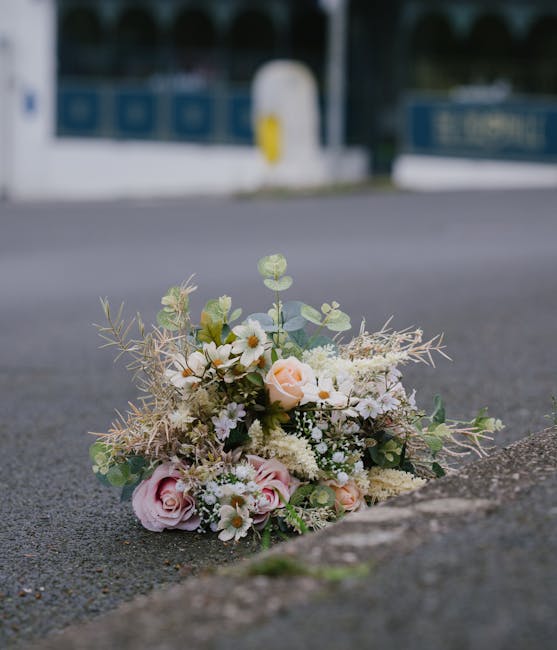
A realistic example helps. Suppose a family wants to leave tribute flowers near a public walkway in Surrey Quays after a memorial gathering. A small, contained arrangement may be acceptable if it does not block anyone, but if the flowers are going to sit near a busy path, they should be placed with care and may need permission first. The same goes for a community group wanting to line a route with flowers for a local event.
For people looking for suitable tribute items, a carefully chosen arrangement from funeral flowers Surrey Quays SE16 or a more specific tribute such as tributes can be easier to manage than improvised public display pieces. In our experience, neatness is half the battle.
Expert Tips for Better Results
Here is the part people often skip, and then regret later. The rule is not just "get permission"; it is also "make the display practical enough to survive the real world." Wind, rain, foot traffic, and general London life do not care how lovely your idea was on paper.
First tip: keep the arrangement compact. Smaller, stable displays are easier to approve and easier to maintain. Tall, wobbly arrangements can look impressive for about ten minutes, then become a nuisance.
Second tip: avoid anything that sheds heavily onto the pavement. Petals, ribbon ends, cellophane, and loose decorative elements can turn into litter very quickly.
Third tip: use containers that will not topple easily. A strong base matters more than people think, especially near busier routes or open corners.
Fourth tip: match the style to the occasion. A simple, respectful design works better for memorials; a bright mixed arrangement may suit a community celebration. A bit of restraint usually goes a long way.
Fifth tip: plan for the end as carefully as the start. Who removes the display? When? Where will the flowers go once they fade? That final step is part of compliance too.
One small human note: the prettiest arrangement is not always the best public arrangement. A florist can tell you this over the counter in about ten seconds, usually while trimming stems and trying not to get water everywhere.
For larger or more time-sensitive arrangements, consider delivery logistics as well. next-day flower delivery Surrey Quays SE16 can be useful when you need a prompt arrival but still want time to prepare the site properly. If you are looking for a broader selection, all flowers and florist choice can help you find a shape or colour palette that works for the setting.
Common Mistakes to Avoid
The biggest mistake is assuming that because something looks small, it will not matter. On a busy pavement, even a small item can create friction. That's the honest truth.
- Placing flowers first and asking later. Once the display is up, it may already be a problem.
- Using the wrong location. A good idea in the wrong spot is still the wrong idea.
- Ignoring weather exposure. Rain and wind shorten life and increase mess.
- Leaving flowers too long. A fading display can start to look unmanaged quickly.
- Forgetting accessibility. Paths need to stay passable for everyone, not just people on foot in dry weather.
- Using sharp or unstable accessories. Wire, broken pots, and flimsy stands can cause avoidable issues.
- Assuming memorial intent overrides everything. Respectful intention is important, but it does not remove safety or land-use rules.
Another common issue is not thinking about maintenance. If nobody is clearly responsible for watering, refreshing, or removing the flowers, the display can decline fast. Then the whole thing becomes a little sad, to be fair.
There is also a quiet mistake people make with colour and scale. Loud colours can be perfect in one context and overwhelming in another. A very large arrangement can dominate a tiny space. Not every place wants a statement piece. Sometimes a gentle, smaller tribute is more convincing.
If you are choosing flowers for a sensitive setting, restrained options such as sympathy flowers or a tidy spray arrangement can be more appropriate than something sprawling. The shape matters almost as much as the blooms.
Tools, Resources and Recommendations
You do not need a huge toolkit, but a little planning gear makes a difference. For most public flower arrangements, the useful items are simple:
- A measuring tape or estimate of the available space
- A phone camera for recording the site before setup
- Stable containers or weighted bases
- Weather-resistant wrapping where suitable
- Labels or notes for responsibility and removal timing
- A spare water source if the flowers need maintenance on site
From a product point of view, look for arrangements that are easy to place neatly and that do not shed excessively. If the purpose is tribute-based, a dedicated memorial item may be more suitable than an everyday bouquet. If the purpose is celebratory, a lighter, colourful design may work better.
A few relevant categories can help narrow the choice:
- funeral and remembrance ranges for memorial settings
- wreaths for formal tribute presentations
- best sellers if you want dependable, popular designs
- same-day delivery options for tight timelines
If you are arranging flowers for a business, community project, or repeated event, it may also help to set an internal standard. For example: who approves the design, who checks the location, who monitors condition, and who removes it. That sort of simple process keeps things calm. Calm is underrated.
You might also want to review the basic site pages that affect ordering and support, especially if the display is linked to a wider flower order or scheduled event. Useful pages include delivery information, guarantees, and returns and refund guidance.
Law, Compliance, Standards, or Best Practice
For public flowers, the safest approach is to follow local land-use expectations and general public-safety principles. The exact wording of any rule may depend on the site, the landowner, and the nature of the display. Because of that, it is best to avoid treating one generic answer as final.
In practical terms, compliance usually means five things:
- Do not obstruct public access.
- Do not create hazards or clutter.
- Respect the landowner's control of the space.
- Keep the display tidy and maintained.
- Remove it when agreed or when it is no longer suitable.
There are also best-practice expectations that matter even where a formal permission system is light-touch. Those include placing items securely, avoiding loose debris, and being considerate of people with mobility needs. If a flower display makes a pavement awkward for a wheelchair user, a parent with a buggy, or someone carrying shopping, it is not a good public placement. Full stop.
Commercial users should be especially careful. If a business is placing flowers outside a premises, the display may interact with trading rules, building access, or estate management conditions. A polished arrangement can improve the frontage, but only if it remains safe and manageable. If you are arranging recurring floral work for a business, a corporate account may help you plan more consistently.
For events, it is also worth thinking about sustainability. Flowers are lovely, but public displays can produce waste if they are over-packaged or replaced too often. Where possible, choose recyclable wrapping, reusable containers, and arrangements that last well. The sustainability page is useful for understanding a more responsible approach to floral ordering.
Options, Methods, or Comparison Table
Different public flower setups work better in different situations. Here is a simple comparison to help you choose the most sensible approach.
| Option | Best for | Advantages | Watch-outs |
|---|---|---|---|
| Hand-tied bouquet | Short-term tribute or event use | Simple, flexible, easy to carry | Can need support in windy or busy areas |
| Basket or posy | Memorials and smaller public placements | Tidy, stable, respectful appearance | Needs a clear, flat, safe space |
| Wreath | Formal remembrance | Strong visual presence, culturally familiar | Can be bulky if the site is tight |
| Planter | Longer-term community beautification | Can improve a space for longer periods | May require explicit permission and maintenance |
| Vase arrangement | Indoor or protected public-facing spaces | Elegant and contained | Less suitable for exposed outdoor use |
In Surrey Quays, the best choice often depends on how exposed the site is and how long the flowers need to last. A sheltered communal entrance can handle more than a windy corner beside a busy walkway. Obvious enough, but easy to forget when you are focused on the flowers themselves.
If you are comparing delivery-led options, best flower delivery Surrey Quays SE16 can help with quality-focused purchases, while cheap flowers Surrey Quays SE16 may suit lower-budget, short-term projects where appearance still matters but spend has to stay modest. For a balanced middle ground, a thoughtful set from any occasion flowers can be surprisingly useful.
Case Study or Real-World Example
Imagine a small local group in Surrey Quays wants to place flowers near a shared public seating area to mark a neighbourhood gathering. They want it to feel welcoming, not formal. The first version of their plan is a few loose pots and bunches clustered around the bench. It looks nice in the room where the plan is discussed. On site, though, it would have been a problem: the path narrows, one pot sits slightly unsteady, and cleaning access becomes awkward.
After a quick rethink, they choose a low basket arrangement and a single contained planter positioned where it does not interfere with access. The flowers are bright, but not overpowering. A small card explains the purpose. One volunteer agrees to return the next day to remove the display if needed. Much better. Less drama, more goodwill.
That kind of adjustment is often what separates a successful public flower display from a frustrating one. The flowers did not change. The thinking did. And that is usually the difference.
In a memorial context, the same idea applies. A family might want to create a wider floral tribute, but a compact wreath or posy is often easier to place respectfully than a sprawling arrangement. For that kind of occasion, options like letter tributes or a careful sympathy flowers selection can feel more appropriate and more manageable.
Practical Checklist
Use this before you place anything in a public area. It saves time, and honestly, a bit of embarrassment too.
- Have I identified exactly where the flowers will go?
- Do I know who controls or maintains the space?
- Is the display temporary or long-term?
- Will it block access, cleaning, or visibility?
- Is the arrangement stable and weather-aware?
- Have I chosen a size and style that suit the location?
- Do I know who will water, monitor, and remove it?
- Have I checked whether permission or approval is needed?
- Will the display remain tidy if the weather turns?
- Have I chosen flowers that match the purpose and tone?
Quick rule of thumb: if you are still unsure after the checklist, pause. A short delay is usually better than a rushed display in the wrong place.
Conclusion
Southwark Council rules for public flowers in Surrey Quays are really about balance: making space for beauty, remembrance, and community expression without creating safety or access problems. That sounds obvious, but it is where many displays go wrong. A little planning goes a long way.
If you remember only one thing, make it this: public flowers should be placed with the same care you would use when welcoming someone into your home. Neat, respectful, and not in the way. Once you start from that mindset, the rest becomes much easier.
Whether you are organising a memorial tribute, a community display, or a decorative public-facing arrangement, choose a format that suits the site, check who manages the land, and keep maintenance in mind from the start. That is the reliable path. Nothing flashy. Just sensible.
And if you need help selecting the right flowers for a local delivery or a more considered arrangement, speaking with a florist can save a lot of guesswork.
Get a free quote today and see how much you can save.
With a bit of care and the right planning, even a small floral gesture can feel properly meaningful.
Frequently Asked Questions
Do I need permission to place public flowers in Surrey Quays?
Often, yes, if the flowers are going on council-managed land, a pavement, verge, or other public space. The need for permission depends on the exact location, how long the flowers will stay there, and whether they affect access or safety.
Can I leave memorial flowers on a pavement or roadside area?
Sometimes, but you should be careful. Memorial flowers placed on public ground can be moved or removed if they obstruct access or are left too long. If the space is busy or narrow, approval is especially worth checking first.
Are small floral tributes treated differently from large displays?
Yes, usually. Small, contained tributes are often easier to accommodate than large arrangements, planter clusters, or fixed installations. Even so, size alone does not decide it. Location and impact matter just as much.
What kind of public flower display is least risky?
Compact, stable, and short-term arrangements tend to be the safest choice. A basket, posy, or tightly arranged tribute is generally easier to place neatly than loose flowers or tall, unstable displays.
How long can flowers stay in a public area?
That depends on the site and any permission given. In general, the longer a display stays up, the more likely it is to need approval, monitoring, and eventual removal. Leaving tired flowers in place is where problems usually start.
Can a florist help with public flower arrangements?
Yes. A local florist can help you choose a suitable format, advise on stability, and suggest arrangements that are better suited to public-facing spaces. That is often far easier than trying to improvise.
What happens if flowers block the pavement or access route?
They may be moved or removed, especially if they create an obstruction or safety issue. Public space needs to remain accessible for everyone, including people with mobility aids, buggies, and deliveries.
Are planters better than loose flowers for public spaces?
Often they are, if the intention is longer-term display and maintenance can be managed. Planters can look tidy and deliberate, but they also need a stable location and clear permission if they sit on public land.
Can I use flowers for a community event in Surrey Quays?
Yes, but plan carefully. Community events often benefit from floral decoration, though you should still check the space, consider access, and make sure the display will not create clutter or hazards.
What if I just want to send flowers to someone in Surrey Quays?
Then a normal delivery option is usually the simplest route. Sending flowers to a private address avoids the uncertainty of public-space rules and keeps the arrangement where it belongs.
Are there budget-friendly options for respectful flower displays?
Yes. Smaller arrangements, simple colour schemes, and tidy basket or posy formats can be both respectful and cost-conscious. You do not need a huge display to make a genuine impression.
Should public flowers be weatherproofed?
As much as possible, yes. Outdoor public displays should be stable, secure, and able to cope with rain or wind. If the forecast looks rough, it is worth choosing a stronger container or a more sheltered spot.
Where can I find suitable flowers for formal or memorial use?
Look for dedicated remembrance or sympathy ranges, because they are usually designed to look appropriate in more sensitive settings. Formal wreaths, posies, and tribute arrangements tend to be easier to place neatly than casual mixed bunches.